
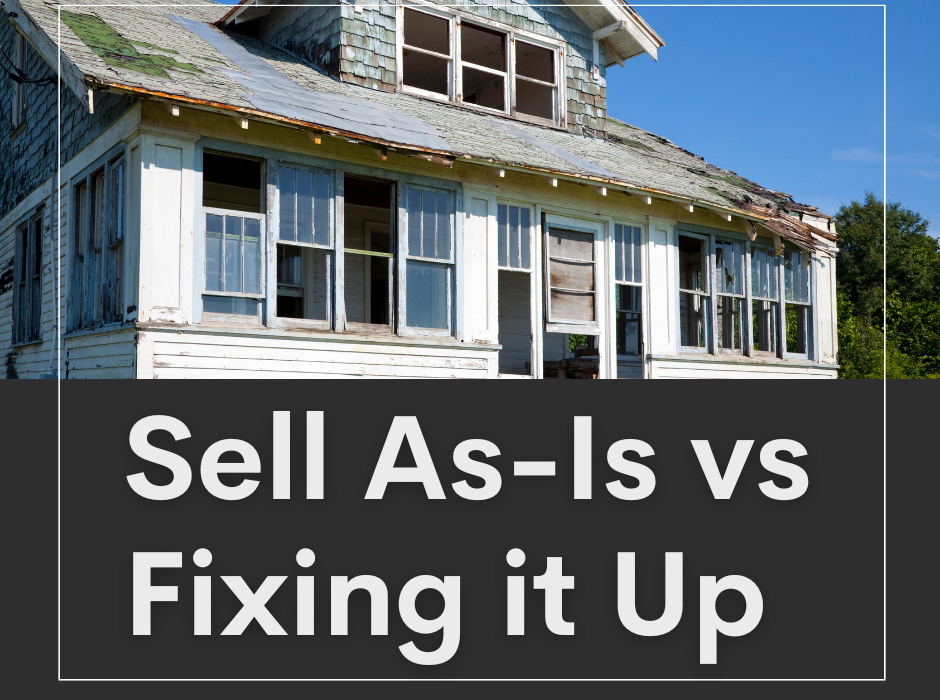
Introduction: The Question Every Home Seller Faces
If you’re thinking about selling your house, you’re probably wrestling with a critical question: Should I invest time and money fixing it up first, or should I sell it as-is in its current condition? This decision can mean the difference between thousands of dollars in your pocket or spent on repairs, months of stress or a quick sale, and peace of mind or endless contractor headaches.
The answer isn’t the same for everyone. Your situation, timeline, budget, and the condition of your home all play important roles in determining the best path forward. However, for many Alabama homeowners—especially those dealing with inherited properties, facing foreclosure, going through divorce, or simply needing to sell quickly—selling as-is is often the smarter, easier, and less stressful choice.
This comprehensive guide will help you understand both options, weigh the real costs and benefits of each approach, and make an informed decision that’s right for your specific situation. We’ll look at the true costs of repairs, the reality of return on investment, the time and stress involved, and when each option makes the most sense.
Understanding “As-Is” Sales: What It Really Means
Before diving into the comparison, it’s important to understand exactly what selling “as-is” means and what it doesn’t mean. There are common misconceptions about as-is sales that can prevent homeowners from considering this valuable option.
What As-Is Actually Means
When you sell a house as-is, you’re offering the property in its current condition without making any repairs or improvements. You’re essentially telling buyers, “What you see is what you get.” The buyer accepts the property with all its flaws, defects, and needed repairs. You won’t be fixing the leaky roof, replacing the old HVAC system, or updating the outdated kitchen before closing.
This doesn’t mean you’re hiding problems or being dishonest. In fact, Alabama law still requires you to disclose known defects even in an as-is sale. You must be honest about issues you’re aware of, but you’re simply not agreeing to fix them. The buyer is purchasing the property with full knowledge of its condition and accepting responsibility for any needed repairs.
What As-Is Doesn’t Mean
Selling as-is doesn’t mean you can hide defects or lie about the property’s condition. You still have legal disclosure obligations in Alabama. If you know about foundation problems, roof leaks, or other significant issues, you must disclose them to potential buyers. Failing to disclose known defects can lead to legal liability even in an as-is sale.
As-is also doesn’t necessarily mean you’ll get lowball offers or that only investors will be interested. While it’s true that as-is properties typically sell for less than fully renovated homes, the difference is often smaller than the cost of making repairs yourself. Many buyers, including investors, house flippers, and handy homeowners, actively seek as-is properties because they represent opportunities.
Who Buys As-Is Properties?
Understanding who buys as-is properties helps you see why this option can work well. Several types of buyers actively seek properties in need of work:
Real Estate Investors
Professional investors and house flippers are the most common buyers of as-is properties. They have the expertise, resources, and contractor relationships to handle repairs efficiently. They’re looking for properties they can buy below market value, renovate, and either resell for profit or hold as rentals. These buyers make quick decisions, often pay cash, and can close in as little as 7-14 days.
Handy Homeowners
Some homebuyers have the skills and desire to fix up a property themselves. They’re willing to buy a fixer-upper at a discount and invest their own labor to create their dream home. These buyers see as-is properties as opportunities to build equity through sweat equity rather than paying premium prices for move-in ready homes.
Buy-and-Hold Investors
Landlords and rental property investors often buy as-is properties to add to their portfolios. They’re less concerned about cosmetic issues and more focused on the property’s rental income potential and long-term appreciation. They’ll make necessary repairs to make the property rentable but aren’t looking for perfection.
Developers
In some cases, developers buy as-is properties for teardown and redevelopment. If your property is in a desirable location but the house itself is in poor condition, a developer might see value in the land rather than the structure.
The True Cost of Fixing Up Your House
Many homeowners underestimate the real costs involved in fixing up a house before selling. It’s not just about the money you spend on materials and labor. There are hidden costs, opportunity costs, and risks that can make repairs far more expensive than they initially appear.
Direct Repair Costs
Let’s start with the obvious costs—the actual money you’ll spend on repairs and improvements. These costs can add up quickly, even for seemingly minor updates.
Cosmetic Updates
Even basic cosmetic improvements require significant investment. Fresh paint throughout a 1,500 square foot home costs $3,000-$6,000 when you hire professionals. New carpet or flooring runs $2,000-$8,000 depending on the size of the home and materials chosen. Updating light fixtures, cabinet hardware, and other small touches adds another 500-$1,500.
Kitchen and bathroom updates, even minor ones, get expensive fast. Replacing countertops costs $1,500-$4,000. New appliances run $2,000-$5,000. Updating bathroom fixtures, vanities, and tile can easily cost $3,000-$8,000 per bathroom. A minor kitchen remodel averages $15,000-$25,000, while a minor bathroom remodel runs $8,000-$15,000.
Major Systems
When major systems need replacement, costs escalate dramatically. A new HVAC system costs $5,000-$10,000 or more depending on the size of your home and the system quality. Roof replacement runs $8,000-$15,000 for an average-sized home in Alabama. Plumbing repairs can range from a few hundred dollars for minor fixes to $5,000-$10,000 for major issues like sewer line replacement.
Electrical updates are another major expense. Updating an outdated electrical panel costs $1,500-$3,000. Rewiring portions of the house can run $3,000-$8,000 or more. Foundation repairs, if needed, are among the most expensive fixes, often costing $5,000-$20,000 or more depending on the severity of the problem.
Exterior Improvements
Curb appeal matters, but improving it costs money. New siding runs $8,000-$15,000 for an average home. Replacing windows costs300-$700 per window, adding up quickly for a whole house. Landscaping improvements can range from a few hundred dollars for basic cleanup to several thousand for significant upgrades.
Deck or patio repairs or replacement cost $3,000-$10,000 depending on size and materials. Driveway repair or replacement runs $2,000-$6,000. Even basic exterior painting costs $3,000-$6,000 for professional work.
Hidden and Unexpected Costs
Beyond the obvious repair costs, there are numerous hidden expenses that catch homeowners off guard.
Permit and Inspection Fees
Many repairs require permits from your local building department. Permit fees vary by location and project scope but can add hundreds or even thousands to your costs. Some municipalities require inspections at various stages of work, adding more fees and potential delays.
Contractor Issues
Finding reliable contractors is challenging, and problems with contractors create additional costs. You might pay deposits to contractors who disappear or do substandard work. Fixing poor workmanship from the first contractor means paying a second contractor to redo the work. Delays from unreliable contractors extend your timeline and increase holding costs.
Scope Creep
Renovation projects almost always uncover additional problems. You start fixing the bathroom and discover water damage behind the walls. You replace the roof and find rotted decking that also needs replacement. These unexpected issues can double or triple your initial budget.
Holding Costs While Making Repairs
Every month you spend making repairs is another month you’re paying to own the house. These holding costs add up quickly and often get overlooked in repair calculations.
If you still have a mortgage on the property, you’re making monthly payments while the house sits empty during renovations. For a $200,000 mortgage at 6% interest, that’s about $1,200 per month in mortgage payments alone.
Property taxes don’t stop while you’re making repairs. Depending on your property’s assessed value and local tax rates, you might be paying 200-$500 or more per month in property taxes.
Homeowners insurance continues whether the house is occupied or not. In fact, insurance for vacant properties undergoing renovation is often more expensive than standard homeowners insurance. Budget100-$300 per month for insurance.
Utilities add to your costs even if no one is living in the house. You need to keep electricity on for contractors to work and to prevent issues like frozen pipes in winter. Water and gas may also need to remain on. These utilities can cost 150-$300 per month.
Opportunity Costs
Perhaps the most overlooked cost of fixing up your house is opportunity cost—what you’re giving up by tying your money and time into repairs rather than moving forward with your life.
Time Value of Money
Money you spend on repairs is money you can’t invest elsewhere. If you spend $30,000 on repairs and it takes six months to complete them and sell the house, you’ve lost the opportunity to invest that $30,000 in other ways. In a market where you could earn 5-7% annually on investments, that six-month delay costs you750-$1,050 in lost investment returns.
Delayed Life Plans
If you’re selling because you’re relocating for a job, going through a divorce, or facing other life changes, delays from making repairs can derail your plans. Missing a job start date, delaying a divorce settlement, or postponing your move to a new city all have real costs, even if they’re hard to quantify in dollars.
Market Risk
Real estate markets can change quickly. The six months you spend making repairs could coincide with a market downturn. Interest rates might rise, reducing buyer purchasing power. More inventory might hit the market, increasing competition. These market changes can cost you more than you gain from making repairs.
Stress and Energy
Managing contractors, making decisions about repairs, and dealing with unexpected problems is exhausting. The stress and time you invest in repairs is time you’re not spending on your job, your family, or your next chapter. For many people, this emotional cost is the highest price of all.
The Reality of Return on Investment
One of the biggest misconceptions about home repairs before selling is that you’ll recoup every dollar you spend. The reality is far different, and understanding actual return on investment is crucial for making smart decisions.
National ROI Statistics
According to Remodeling Magazine’s annual Cost vs. Value Report, most home improvements return less than 100% of their cost when you sell. Even the best-performing projects typically return only 50-80% of what you spend.
Minor kitchen remodels, one of the better-performing improvements, return about 72% of cost on average. This means if you spend $20,000 on a minor kitchen update, you might increase your home’s value by $14,400—losing $5,600 on the investment.
Bathroom remodels return about 60-70% of cost. Major kitchen remodels return even less, typically around 50-60%. Basement finishing returns about 70%. New siding returns about 68%. Even simple projects like garage door replacement, which has one of the best ROIs, only returns about 94% of cost.
These are national averages, and returns vary significantly by location, market conditions, and the specific property. In some markets and situations, returns are even lower.
Why ROI Is Often Lower Than Expected
Several factors explain why you typically don’t recoup your full investment in pre-sale repairs.
You’re Paying Retail, Selling at Wholesale
When you hire contractors to make repairs, you’re paying retail prices for labor and materials. However, when you sell, buyers are comparing your home to other available properties. They’re not willing to pay you back for every dollar you spent—they’re looking for the best value in the current market.
Over-Improvement for the Neighborhood
If you invest heavily in upgrades that exceed what’s typical for your neighborhood, you won’t recoup those costs. Putting a $40,000 kitchen in a neighborhood where most homes sell for $150,000 means you’ve over-improved. Buyers shopping in that price range aren’t willing to pay a premium for high-end finishes.
Buyer Preferences Vary
Your taste in finishes, colors, and styles might not match what buyers want. You might love the expensive tile you chose for the bathroom, but buyers might prefer something different. When improvements reflect your personal taste rather than broad market appeal, you’re less likely to recoup costs.
Market Conditions
In a buyer’s market with lots of inventory, even beautifully renovated homes struggle to command premium prices. Buyers have options and can negotiate aggressively. The improvements you made might help your home sell faster than competing properties, but they might not increase the price enough to justify the investment.
The Math Often Doesn’t Work
Let’s look at a realistic example to see how the math typically works out:
Scenario: Fixing Up Before Selling
- Current home value (as-is): $180,000
- Estimated repairs needed: $25,000
- Time to complete repairs: 4 months
- Holding costs during repairs: $2,000/month × 4 = $8,000
- Total investment: $33,000
- Expected home value after repairs: $215,000
- Realtor commission (6%): $12,900
- Net proceeds: $215,000 – $12,900 = $202,100
- Subtract investment: $202,100 – $33,000 = $169,100
Scenario: Selling As-Is
- As-is sale price to investor: $155,000
- No repairs needed: $0
- No holding costs: $0
- No realtor commission: $0
- Net proceeds: $155,000
- Time to close: 2 weeks
Comparison:
- Fix-up net: $169,100
- As-is net: $155,000
- Difference: $14,100
- Time difference: 4 months vs. 2 weeks
In this example, fixing up the house nets you $14,100 more, but it takes four months longer and requires you to front $33,000 in cash. For many homeowners, the $14,100 difference isn’t worth the time, stress, and upfront investment—especially if they don’t have $33,000 readily available or if they need to sell quickly.
When Selling As-Is Makes the Most Sense
While every situation is unique, certain circumstances make selling as-is the clearly superior choice. If you find yourself in any of these situations, seriously consider the as-is route.
You Need to Sell Quickly
Life doesn’t always give you the luxury of time. When you need to sell fast, making repairs simply isn’t practical. Several situations create urgent selling timelines:
Foreclosure
If you’re facing foreclosure, time is your enemy. Every day that passes brings you closer to losing your home and damaging your credit. You don’t have months to make repairs and list with a realtor. Selling as-is to a cash buyer can help you avoid foreclosure, protect your credit, and potentially walk away with some money rather than losing everything.
Job Relocation
When you’re relocating for work, your timeline is often dictated by your employer. You might have just a few weeks to sell your house, move, and start your new job. Making repairs isn’t feasible when you’re also packing, coordinating movers, and preparing for a major life transition.
Divorce
Divorce creates emotional and financial pressure to resolve property issues quickly. Both parties typically want to move forward with their lives, and neither wants to continue co-owning property or making joint decisions about repairs. Selling as-is provides a clean break and allows both parties to move on.
Inherited Property
When you inherit a property, especially one that’s been vacant or poorly maintained, you might not have the time, money, or desire to invest in repairs. You might live far away, making it difficult to manage contractors. Selling as-is allows you to liquidate the property quickly without the burden of long-distance renovation management.
The Property Needs Extensive Repairs
The more repairs a property needs, the more sense it makes to sell as-is. Major repairs are expensive, time-consuming, and risky. When you’re looking at a long list of needed fixes, the math often favors selling as-is.
Major Systems Failures
If your HVAC system is dead, your roof is failing, or your foundation has serious issues, you’re looking at tens of thousands of dollars in repairs. These aren’t cosmetic issues you can ignore—they’re major problems that will come up in inspections and scare away traditional buyers. However, investors who specialize in renovations can handle these issues efficiently and are willing to buy properties with major system failures.
Deferred Maintenance
Properties that have been neglected for years often need so many repairs that it’s overwhelming to even know where to start. When you’re facing a long list of needed fixes—plumbing, electrical, structural, cosmetic—the total cost can easily exceed what makes financial sense. Selling as-is to someone who specializes in renovations is often the smartest choice.
Code Violations
If your property has code violations or unpermitted work, bringing everything up to code can be expensive and complicated. Investors who understand these issues and know how to resolve them are often your best buyers.
You Don’t Have Cash for Repairs
Even if repairs would theoretically increase your home’s value, you need cash upfront to pay for them. Many homeowners simply don’t have thousands or tens of thousands of dollars available for pre-sale repairs.
No Savings Available
If you don’t have savings to fund repairs, your options are limited. You could try to get a home equity loan or line of credit, but this requires qualifying for financing and taking on more debt. For many homeowners, especially those already financially stressed, this isn’t feasible.
Can’t Afford to Wait
Even if you could eventually save enough for repairs, the time it would take to save that money extends your timeline significantly. If you need to sell within a few months, you can’t wait a year to save up repair funds.
Don’t Want to Risk Your Savings
Some homeowners have savings but don’t want to risk them on repairs that might not pay off. If you’re retired or nearing retirement, spending your nest egg on home repairs that might not return full value is a risky proposition. Selling as-is preserves your savings for your future needs.
You Want to Avoid Stress and Hassle
The emotional and mental cost of managing home repairs is real and significant. For many people, avoiding this stress is worth accepting a lower sale price.
No Time or Energy
If you’re working full-time, caring for family members, or dealing with health issues, you might simply not have the time or energy to manage contractors and renovation projects. The stress of coordinating repairs while juggling other responsibilities can be overwhelming.
Bad Contractor Experiences
If you’ve had negative experiences with contractors in the past—unreliable workers, poor quality work, cost overruns—you might be understandably reluctant to go through that again. Selling as-is eliminates the need to deal with contractors entirely.
Want a Clean Break
Sometimes you just want to be done with a property. Whether it’s a rental that’s been nothing but headaches, an inherited house you never wanted, or a marital home with painful memories, selling as-is provides a clean, quick break that allows you to move forward emotionally.
The Numbers Don’t Support Repairs
Even when you have time and money for repairs, sometimes the math simply doesn’t work. If your analysis shows that repairs won’t return enough value to justify the investment, selling as-is is the rational choice.
Low-Value Property
In lower-priced markets, the dollar amounts involved in repairs often don’t make sense. Spending $20,000 on repairs to a house worth $100,000 is a much bigger percentage than spending $20,000 on a house worth $300,000. In lower-value properties, repairs often consume too much of the total value to be worthwhile.
Declining Neighborhood
If your neighborhood is declining or has high crime, extensive repairs won’t command premium prices. Buyers shopping in these areas are looking for value, not perfection. Investing heavily in repairs won’t pay off in a declining market.
Saturated Market
In markets with lots of inventory and few buyers, even beautifully renovated homes struggle to sell quickly or command top dollar. If your market is saturated, making repairs might not give you any competitive advantage.
When Fixing Up Might Make Sense
While this guide emphasizes the benefits of selling as-is, there are situations where making some repairs before selling could be worthwhile. Understanding when repairs make sense helps you make the right decision for your specific situation.
Minor Cosmetic Issues Only
If your home is in generally good condition and only needs minor cosmetic updates, making those improvements might make sense. The key is that the repairs are truly minor, inexpensive, and likely to return close to their full cost.
High-ROI Improvements
Some improvements consistently return good value. Fresh paint is one of the best investments you can make, typically returning 100% or more of cost. Professional cleaning and decluttering costs little but makes a big difference in how buyers perceive your home. Landscaping cleanup and curb appeal improvements are relatively inexpensive and create strong first impressions.
Minor repairs like fixing leaky faucets, replacing broken light fixtures, and patching holes in walls are inexpensive but make your home show much better. These small fixes prevent buyers from seeing your home as a “fixer-upper” when it really isn’t.
You Have Time and Skills
If you’re handy and can do repairs yourself, the equation changes significantly. Your labor is free, so you’re only paying for materials. This dramatically improves the return on investment for repairs.
DIY Capabilities
If you can paint, install flooring, do basic plumbing and electrical work, and handle other common repairs yourself, you can make improvements for a fraction of what they’d cost with hired contractors. Your time investment is significant, but you’re not paying retail labor rates.
However, be realistic about your skills and available time. DIY projects often take much longer than anticipated, and poor-quality DIY work can actually hurt your home’s value rather than help it. Only tackle DIY repairs if you have genuine skills and adequate time to complete them properly.
Strong Market Conditions
In a hot seller’s market with low inventory and high demand, making repairs might pay off better than in a balanced or buyer’s market. When buyers are competing for limited inventory, they’re willing to pay premium prices for move-in ready homes.
Multiple Offer Situations
In markets where homes regularly receive multiple offers, being in pristine condition can help you command top dollar. Buyers in competitive situations are less likely to negotiate over price or request repairs. They want to make their offer as attractive as possible to beat out competition.
However, even in hot markets, you need to run the numbers carefully. Just because the market is strong doesn’t automatically mean repairs will pay off.
High-Value Property**
In higher-priced markets and neighborhoods, the dollar amounts involved in repairs represent a smaller percentage of total value. Spending $30,000 on repairs to a $500,000 home is more reasonable than spending $30,000 on a $150,000 home.
Additionally, buyers shopping for higher-priced homes typically have higher expectations. They’re more likely to expect move-in ready condition and less likely to be interested in fixer-uppers. In luxury markets, making repairs might be necessary to attract qualified buyers.
The As-Is Selling Process: What to Expect
If you decide selling as-is is right for you, understanding the process helps you navigate it successfully and get the best possible outcome.
Finding the Right Buyer
Not all buyers are equally interested in as-is properties. Targeting your marketing to the right audience increases your chances of a quick sale at a fair price.
Cash Buyers and Investors
Real estate investors and cash buyers are your primary market for as-is properties. These buyers specialize in purchasing properties that need work. They have the expertise, resources, and contractor relationships to handle repairs efficiently. They make quick decisions, often within 24-48 hours of seeing a property, and can close in as little as 7-14 days.
To reach these buyers, you can contact local real estate investment companies directly, list your property on investor-focused websites, work with real estate agents who specialize in investment properties, or attend local real estate investor meetings.
iBuyers
iBuyers are companies that use technology to make instant offers on homes. Companies like Opendoor, Offerpad, and Zillow Offers (though Zillow has exited this business in some markets) will buy homes in as-is condition. They typically offer 70-90% of market value, which is higher than traditional investors but lower than retail sales.
The advantage of iBuyers is speed and convenience. You can get an offer within hours and close on your timeline. The disadvantage is that their offers might be lower than what you’d get from a traditional investor, and they charge service fees that reduce your net proceeds.
Wholesalers
Real estate wholesalers find properties, get them under contract, and then assign the contract to another investor for a fee. Working with a wholesaler can be a quick way to sell, though you’ll typically receive a lower price because the wholesaler needs to leave room for their fee and the end buyer’s profit.
Getting Multiple Offers
Even when selling as-is, it’s smart to get multiple offers to ensure you’re getting fair value. Different buyers have different criteria, resources, and profit requirements, so offers can vary significantly.
Contact several cash buyers or investors in your area. Provide them with basic information about your property—address, square footage, number of bedrooms and bathrooms, and a general description of condition. Most will want to see the property in person before making an offer.
Be honest about the property’s condition. Trying to hide problems will only create issues later and might cause buyers to reduce their offers or walk away entirely. Transparency builds trust and leads to smoother transactions.
Compare offers not just on price but on terms. Consider the closing timeline, whether the buyer needs financing (cash offers are more certain), any contingencies in the offer, and the buyer’s track record and reputation.
Understanding the Offer
When you receive an offer on your as-is property, make sure you understand all the terms, not just the price.
Purchase Price
This is the amount the buyer is offering to pay for your property. With as-is sales, this will be below market value for a fully renovated home, but it should be fair given the property’s current condition.
Closing Timeline
Cash buyers can typically close much faster than traditional buyers who need financing. Closing timelines of 7-14 days are common with cash buyers, though you can often negotiate a longer timeline if you need more time to move.
Contingencies
Contingencies are conditions that must be met for the sale to proceed. Common contingencies include inspection contingencies (buyer can back out based on inspection results), financing contingencies (buyer can back out if they can’t get a loan), and appraisal contingencies (buyer can back out if the property doesn’t appraise for the purchase price).
As-is cash sales typically have few or no contingencies, making them more certain to close. However, some buyers include a brief inspection period to verify the property’s condition matches what they expected.
Closing Costs
Understand who pays which closing costs. In many as-is sales, the buyer pays most or all closing costs, which increases your net proceeds. However, this varies by market and negotiation.
Closing the Sale
Once you accept an offer, the closing process for an as-is sale is typically straightforward and quick.
Title Work
A title company will research the property’s title to ensure there are no liens, judgments, or other issues that would prevent clear transfer of ownership. If any issues are found, they’ll need to be resolved before closing.
Final Walkthrough
The buyer will typically do a final walkthrough shortly before closing to verify the property’s condition hasn’t changed since they made their offer. Make sure you haven’t removed any fixtures or made any changes that weren’t agreed upon.
Closing
At closing, you’ll sign documents transferring ownership to the buyer and receive your proceeds. With cash sales, this process is usually quick and simple. You’ll receive your money via wire transfer or cashier’s check, typically on the same day as closing.
Common Concerns About Selling As-Is
Many homeowners have concerns about selling as-is that prevent them from considering this option. Understanding the reality behind these concerns can help you make a more informed decision.
“I’ll Get Lowball Offers”
It’s true that as-is offers will be lower than what you might get for a fully renovated home sold through traditional channels. However, “lowball” is relative. When you factor in the costs you’re avoiding—repairs, holding costs, realtor commissions, and the value of your time—as-is offers are often quite fair.
Additionally, you’re not obligated to accept any offer. If you receive offers that seem unreasonably low, you can decline them and try other selling methods. Getting as-is offers costs you nothing and gives you valuable information about your options.
“Only Investors Will Be Interested”
While investors are the primary market for as-is properties, this isn’t necessarily a bad thing. Investors are professional buyers who make quick decisions, pay cash, and close on time. They’re often easier to work with than traditional buyers who need financing, have multiple contingencies, and might back out of the deal.
Additionally, some handy homebuyers and first-time buyers looking for affordable options are willing to buy as-is properties. Your property might attract more interest than you expect.
“I’m Leaving Money on the Table”
This concern assumes that making repairs would definitely increase your home’s value by more than the cost of repairs. As we’ve discussed, this often isn’t true. When you account for the actual costs of repairs, holding costs, opportunity costs, and the reality that you typically don’t recoup 100% of repair costs, selling as-is often nets you similar or even better proceeds than fixing up first.
Run the numbers for your specific situation. Compare realistic as-is offers to realistic projections of what you’d net after making repairs, paying holding costs, and paying realtor commissions. You might be surprised to find that the difference is smaller than you thought.
“My House Is Too Nice to Sell As-Is”
As-is doesn’t mean your house is a disaster. Many as-is sales involve homes in decent condition that simply need updating or have a few issues the seller doesn’t want to address. If your home is in good condition overall, you’ll receive higher as-is offers that reflect that condition.
You can also consider a hybrid approach—make a few minor, high-ROI improvements while selling the property as-is regarding major systems or expensive updates.
“I’ll Lose Control of the Process”
Some homeowners worry that selling as-is means accepting whatever buyers offer and having no negotiating power. This isn’t true. You maintain complete control over whether to accept offers, which offer to accept, and what terms you’ll agree to.
You can negotiate price, closing timeline, and other terms just as you would in any real estate transaction. The difference is that you’re not agreeing to make repairs, but you still have full control over the sale.
Making Your Decision: A Framework
Deciding whether to sell as-is or fix up first is a personal decision that depends on your unique circumstances. Use this framework to evaluate your situation and make the choice that’s right for you.
Step 1: Assess Your Situation
Start by honestly evaluating your circumstances:
Timeline: How quickly do you need to sell? If you need to sell within 30-60 days, making extensive repairs probably isn’t feasible.
Financial Resources: Do you have cash available for repairs? Can you afford to wait months for repairs to be completed and the house to sell?
Property Condition: What repairs does your property actually need? Are they minor cosmetic issues or major system failures?
Market Conditions: What’s your local real estate market like? Is it a hot seller’s market or a slower buyer’s market?
Personal Capacity: Do you have the time, energy, and emotional bandwidth to manage repairs and a traditional sale?
Step 2: Run the Numbers
Create realistic financial projections for both scenarios:
As-Is Scenario:
- Get 2-3 actual offers from cash buyers
- Calculate your net proceeds (offer price minus any costs)
- Note the timeline to closing
Fix-Up Scenario:
- Get detailed estimates for all needed repairs
- Calculate holding costs for the repair period
- Estimate realistic sale price after repairs (be conservative)
- Subtract repair costs, holding costs, and realtor commission
- Calculate net proceeds
- Add 2-3 months to your timeline for repairs plus 2-3 months for traditional sale
Compare the net proceeds and timelines. Is the difference in proceeds worth the additional time and stress?
Step 3: Consider Non-Financial Factors
Money isn’t everything. Consider these important non-financial factors:
Stress and Hassle: How much is your peace of mind worth? For many people, avoiding the stress of managing repairs and a traditional sale is worth accepting somewhat lower proceeds.
Certainty: As-is cash sales are much more certain to close than traditional sales. There are fewer contingencies and less that can go wrong. If certainty is important to you, this favors selling as-is.
Life Circumstances: What else is going on in your life? If you’re dealing with a death in the family, divorce, job change, or other major life events, adding the stress of home repairs might not be wise.
Emotional Attachment: Sometimes the best decision is the one that allows you to move forward emotionally. If staying involved with the property through a lengthy repair and sale process is emotionally difficult, selling as-is might be the healthier choice.
Step 4: Make Your Decision
After assessing your situation, running the numbers, and considering non-financial factors, make your decision with confidence. There’s no universally “right” answer—only the right answer for your specific situation.
If you choose to sell as-is, move forward without second-guessing. You’ve made an informed decision based on your circumstances and goals.
If you choose to make repairs, create a detailed plan with specific budgets, timelines, and contingencies. Stick to your budget and timeline as much as possible.
Conclusion: The Smart Choice for Most Alabama Homeowners
For many homeowners in Alabama—especially those dealing with inherited properties, facing foreclosure, going through divorce, or simply needing to sell quickly—selling as-is is the smarter, easier, and less stressful choice. While it’s true that as-is sales typically result in lower sale prices than fully renovated homes, the difference is often much smaller than people expect when you account for all the costs involved in making repairs.
The reality is that fixing up a house before selling sounds good in theory, but for most homeowners, the costs, stress, and time involved don’t make financial sense. Repairs are expensive, often don’t return full value, and create months of delays and uncertainty. Selling as-is provides speed, certainty, and peace of mind that’s worth a lot, even if it’s hard to quantify in dollars.
The key is to make an informed decision based on your specific situation rather than assumptions about what you “should” do. Get actual as-is offers so you know what your options are. Run realistic numbers on what repairs would actually cost and return. Consider your timeline, financial resources, and personal circumstances. Then make the choice that’s right for you.
Remember that selling as-is doesn’t mean you’re giving up or settling for less than you deserve. It means you’re making a smart business decision that prioritizes your time, money, and peace of mind. For many Alabama homeowners, that’s the smartest choice of all.
Whether you’re considering selling your house as-is, need a quick cash offer, or want to explore your options without obligation, we provide honest solutions that help you make the best decision for your situation. Reach out anytime to discuss your property and get a fair cash offer with no pressure and no obligation.
Disclaimer: This article provides general information about selling houses as-is versus making repairs and should not be considered financial, legal, or real estate advice. Real estate decisions are complex and vary based on individual circumstances, property condition, and market conditions. Always consult with qualified real estate professionals, attorneys, and financial advisors before making decisions about selling your property. The information in this article is current as of 2025 but may change.